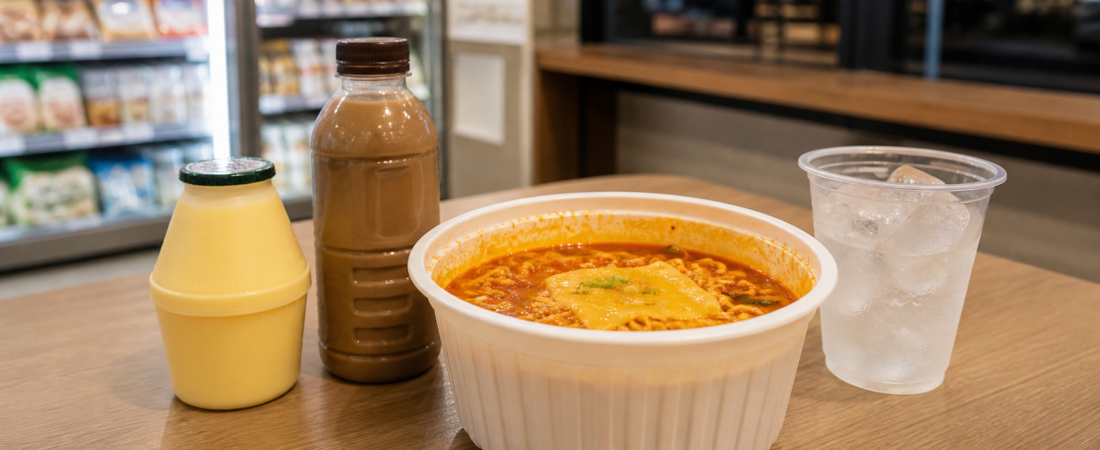
Korean convenience store mixes are less a fixed menu than a playful part of pyeonuijeom culture: shoppers pair familiar drinks, snacks, and instant noodles to make something that suits their taste. The most reliable approach is simple—start with a Korean banana milk or coffee base, mix only a small portion first, and treat promotional displays as inspiration rather than a national rule.
That distinction matters. A convenience-store “recipe” may be an official pairing promoted by one chain or manufacturer, a popular consumer habit, or a one-off social-media experiment. Korea’s CU and GS25 rotate products and campaigns, while neighborhood branches can have different stock even within one city. This guide focuses on flavor logic, realistic quantities, safety, and choices that keep an experiment enjoyable instead of overly sweet, too caffeinated, or wasteful.
Korean convenience-store mix culture: why the trend works
Korean convenience stores have long been more than emergency snack stops. They are practical meal counters, late-night gathering places, and compact testing grounds for new products. Refrigerated drinks, single-serve snacks, hot-water noodle stations, ice cups, and limited releases make it easy to build a small custom meal without buying full-size ingredients.
Mixing developed naturally from that setup. A traveler might use an ice cup to turn bottled coffee into a colder drink, add a small dairy drink to soften a bitter latte, or top ramyeon with an egg and cheese purchased a few steps away. None of this requires a secret menu. The fun comes from using products designed to be consumed individually in a combination that is still sensible.
The best mixes have a clear purpose: make coffee creamier, turn a sweet milk drink into a colder dessert, balance the heat or saltiness of instant ramyeon, or use a small add-in completely. The less useful version is a novelty pile-up: several sugary drinks combined only because their colors photograph well, or two intensely seasoned noodle packets used at full strength. Restraint usually tastes better than escalation.
Official pairings, store displays, and DIY mixes are not the same
When a store places two products together with a recipe card, call it an in-store or brand-promoted pairing. It is not proof that every branch carries the items, that the recipe is permanent, or that all Koreans drink it. A display pairing coffee- or chocolate-flavored milk drinks with banana, strawberry, or melon milk is a useful example of how retailers invite comparison, but it should be read as a local promotion rather than a national standard.
Consumer DIY recipes deserve a different label. They can be delicious, but they are preferences rather than authoritative culinary rules. In this guide, “try” means a practical starting point; it does not mean “the authentic version.” Check the refrigerated case, shelf tag, or store app. Official CU and GS25 sites can help with current campaigns, but availability changes fast.
Korean banana milk combinations that make practical sense
Banana-flavored milk is a natural starting point because it is sweet, creamy, and familiar enough to pair with coffee or chocolate without a blender. Binggrae’s iconic banana-flavored milk helped make the profile recognizable, but banana milk is also a category. Manufacturers and package sizes vary in sweetness, dairy content, and banana aroma.
Mix by proportion and taste rather than brand mythology. Buy a small cup of ice if you want a colder drink, use a clean straw or spoon, and combine only what you will finish promptly.
Banana milk + bottled latte: a gentle coffee shake
This is a dependable first combination. A ready-to-drink latte supplies roast and coffee bitterness; banana milk supplies sweetness and body. The result is closer to a mild coffee shake than a café latte.
Starting ratio: about two parts bottled latte to one part banana milk. Begin with a few generous pours instead of emptying the entire container.
- Pour the coffee over ice, leaving room in the cup.
- Add banana milk slowly.
- Stir or swirl gently.
- Taste before adding more; banana becomes dominant quickly.
A less-sweet latte or a coffee-forward drink works best. If the coffee already lists sugar or syrup prominently, start with one-quarter banana milk. Caffeine is not reduced by mixing; it is only diluted in taste.
Banana milk + chocolate milk: dessert territory
Chocolate and banana are an intuitive pairing. Equal parts is usually enough; if the chocolate drink is very sweet, use two parts banana milk to one part chocolate milk. Chill both first, combine over ice, and leave room to swirl. Do not shake carbonated products or use a container that has been sitting open.
Think of this as a dessert drink, not hydration. Both drinks may contain milk and soy, while a snack served beside them may add wheat, egg, nuts, or peanut cross-contact. Check the Korean allergen panel.
Banana milk + strawberry or melon milk: choose one, use less
Banana plus strawberry leans toward a strawberry-banana profile. Banana plus melon is more confectionery-like and can become cloying faster. Start with three parts banana milk to one part strawberry or melon milk, then adjust. A small splash over plenty of ice gives the idea without committing a second full drink.
These combinations may be promoted in one branch and absent in another. If a flavor is missing, use the flavor profile rather than hunting one exact package. Do not substitute a fruit soda and expect the same creamy result; dairy plus carbonation foams and separates easily.
Banana milk + coffee-milk products: read the label
Products marketed as mixpresso, latte, mocha, or dessert coffee already sit between coffee, cocoa, and milk. They are likely to appear in curated pairing displays because the creamy base works with flavored milk. Decide what banana milk should do: soften coffee, enrich cocoa, or add a small accent to an already-sweet milk coffee. Promotional instructions may be current and useful, but another branch may not carry the line-up.
Other Korean convenience-store drink mix categories worth trying
Categories travel better than a long list of supposedly viral recipes.
Iced coffee + plain milk: the low-drama choice
For a café-like drink, buy iced Americano or unsweetened coffee, a small plain milk, and an ice cup. Add milk gradually. It is less distinctive than banana milk coffee but easier to control for sweetness and repeat at another store. Keep dairy cold and finish soon after mixing.
Chocolate or cocoa drink + milk: use ice as the third ingredient
Pour a chocolate beverage over a full cup of ice, then add a small amount of plain or banana milk. Dilution often tastes better than doubling the sugar. This works with limited-time products even when no matching campaign is running.
Fruit drink + sparkling water: non-dairy only
A non-dairy fruit drink can be lengthened with plain sparkling water over ice for a lighter, spritz-like result. This is personal DIY, not a traditional formula. Pour sparkling water last and slowly; never seal and shake it. Avoid sparkling water in milk, yogurt drinks, or cream coffee because it foams and may separate.
Yogurt drinks: cold, not a health hack
Small yogurt drinks can be paired with ice or a mild fruit drink, but a mixed drink is not medical advice or a substitute for a balanced meal. Check added sugar, milk ingredients, and storage instructions. Yogurt is not automatically safe for someone with a milk allergy or lactose intolerance.
Ramyeon mix recipes: practical upgrades without a stunt
Korean convenience-store ramyeon culture is built around small upgrades: an egg, cheese, green onion, or a different noodle-and-sauce combination. Follow the noodle package first. Hot-water stations, microwave instructions, and cup-noodle containers are not interchangeable.
If a product requires stovetop cooking, do not assume a dispenser replaces that step. Cup noodles are designed for their own method; bagged noodles often need a saucepan or microwave-safe bowl. Ask staff whether a microwave or hot-water area is for customers, fill only to the marked line, and do not carry an overfilled bowl through a crowded store.
Cheese ramyeon: the reliable creamy upgrade
Prepare the ramyeon as directed. When the noodles are nearly ready, lay one slice of cheese on top, cover briefly so it melts, and stir gently. Cheese rounds chili heat and adds body, but it does not remove sodium or make very spicy noodles mild.
Cheese adds milk. Ramyeon may contain wheat, soy, sesame, shellfish, fish, egg, or meat-derived ingredients. Read both packages if you are vegetarian, halal-conscious, allergic, or avoiding specific animal ingredients.
Egg ramyeon: only when the setup supports it
With a stove and a compatible recipe, crack an egg into the broth during the final stage and cook until the white is set. In a microwave, use a microwave-safe bowl, pierce the yolk if heating a whole egg, cover loosely, and ensure it is fully cooked. Do not crack a raw egg into a finished cup and rely on residual warmth. A refrigerated packaged hard-boiled egg is the simpler option: slice it over the noodles and eat promptly.
Cheese + egg: filling, not automatically balanced
One egg and one cheese slice make a satisfying bowl, but the result can be rich and salty. Add vegetables only when they can be handled cleanly and eaten immediately, such as a small amount of pre-washed green onion or packaged salad. Pair the meal with water rather than another sugary drink.
Two-noodle mixes: use a known formula
Mixed instant-noodle dishes are part of Korean popular food culture, but online claims are easy to overstate. Use a recipe printed or promoted by a manufacturer when available, or make a conservative version at home. Combine noodles only when cooking times are compatible, and use seasoning selectively. Two full packets can make an unnecessarily salty, spicy bowl; start with one packet plus a small amount of the second, taste, and choose a plan that uses the remaining seasoning rather than wasting food.
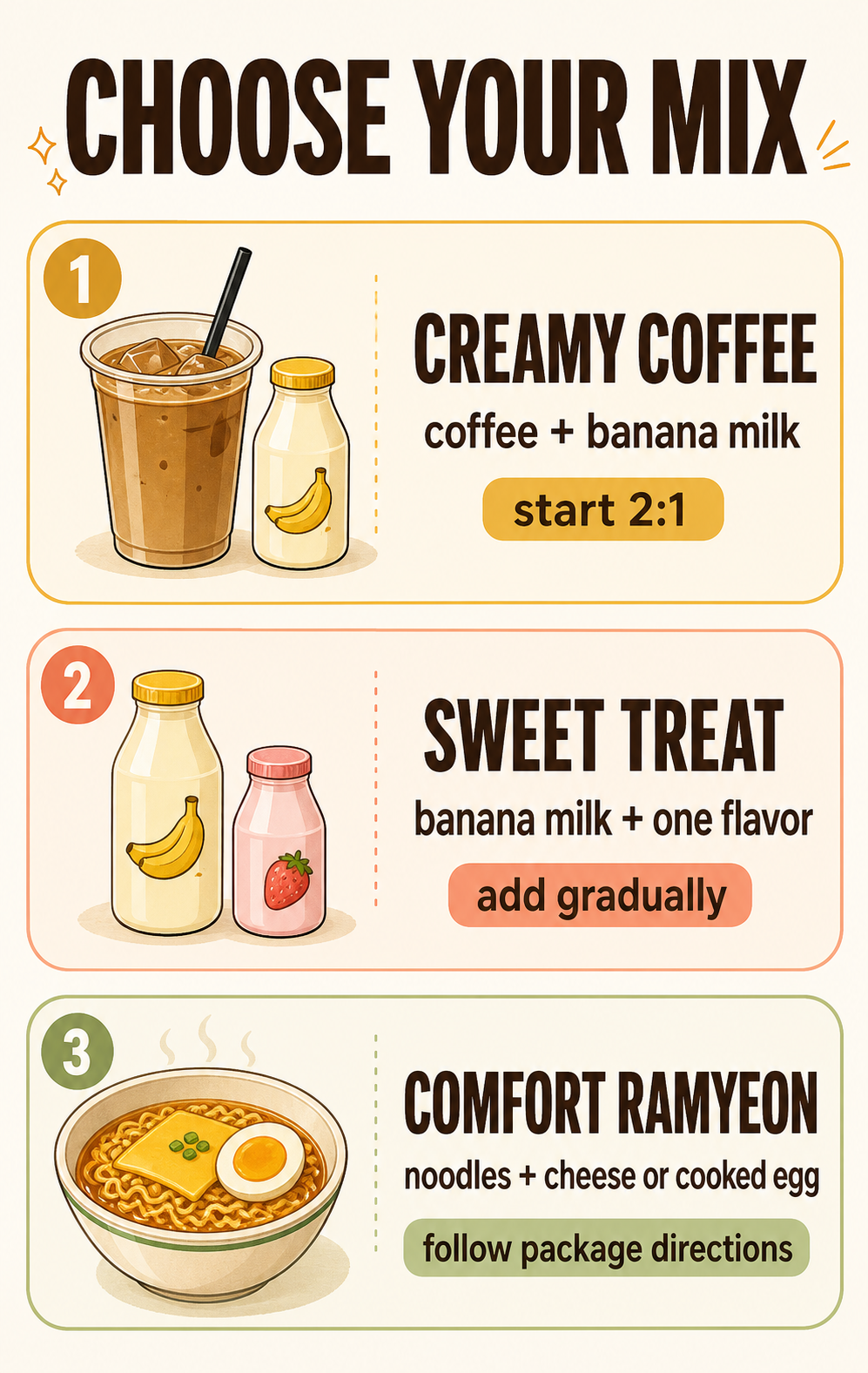
A mobile-friendly decision guide for Korean convenience-store mixes
Creamy coffee: Buy iced coffee or bottled latte, banana milk, and an ice cup. Start with two parts coffee to one part banana milk. Choose it when you want less bitterness; remember that caffeine remains.
Sweet treat: Buy banana milk and one small chocolate, strawberry, or melon milk. Add the second slowly over ice. Choose it when sharing or having dessert; watch the sugar and allergens.
Comfort ramyeon: Buy a noodle you can prepare correctly, one cheese slice or one properly cooked egg, and water. Follow package directions; watch hot-water safety, sodium, spice tolerance, and allergens.
How to shop smarter at CU, GS25, and neighborhood stores
Stock is local. Major chains can launch national-looking promotions, but branches differ because of demand, delivery timing, shelf space, and seasonal rotations. A flagship branch near a university or transit hub may carry more novelty drinks than a residential store.
- Look for a display card or pairing sign first.
- Check for a compatible category, not only one exact brand.
- Read the nutrition and allergen panel before buying two sweet dairy products.
- Get an ice cup only if you will mix and drink immediately.
- Ask staff about microwave, hot-water, and disposal rules.
Useful terms include banana uyu (banana milk), keopi (coffee), ttalgi uyu (strawberry milk), melon uyu (melon milk), ramyeon (instant noodles), and maepda (spicy). Use a translation app for ingredients and allergens because formulas vary.
For trip planning, browse ABCNote’s Korea travel coverage. For the broader food context, see our Korean food guides.
Sugar, caffeine, allergen, and food-handling checks
Sweetness and caffeine
Two individually reasonable drinks can become intensely sweet. A coffee may carry meaningful caffeine even when milk makes it taste mild. Read the package rather than guessing. If you are sensitive to caffeine, pregnant, managing a health condition, or buying for a child, choose appropriately and seek personal medical guidance when needed. Milk does not cancel caffeine.
Allergens and dietary needs
Common ingredients can contain milk, soy, wheat, egg, peanuts, tree nuts, sesame, fish, shellfish, pork, chicken, or beef. A product that looks vegetarian may use animal stock or seafood seasoning. If you cannot verify the label, choose an unopened product with a clearly understood ingredient list.
Temperature and cleanup
Keep refrigerated products cold until ready. Mix dairy immediately before consumption, do not leave it in a warm backpack or car, and do not pour an unfinished mix back into the original container. With ramyeon, keep the lid away from your face, let the bowl settle before carrying it, wipe spills, and sort waste according to store rules.
Frequently asked questions about Korean convenience store mixes
What is the easiest Korean convenience-store mix to try first?
Start with iced coffee and a small amount of banana milk over ice. Add banana milk gradually until the coffee tastes creamy enough for you.
Are banana milk and coffee mixes an official Korean recipe?
Not usually. Some stores and brands promote specific pairings, while many are personal DIY choices. A display can be official for that retailer without being a permanent nationwide menu item.
Can I mix any flavored milk with banana milk?
Experiment with small amounts of chocolate, strawberry, or melon milk, but they are often very sweet together. Start with one main drink and a splash of the second over ice.
What can I add to Korean ramyeon at a convenience store?
Cheese and a properly cooked egg are practical additions. Follow package instructions, cook eggs thoroughly, and check allergens and spice level.
Do CU and GS25 carry the same mix ingredients?
No. Ranges vary by chain, neighborhood, season, and delivery schedule. Use a displayed pairing as inspiration, then choose a similar category if the exact item is unavailable.
Is it safe to mix dairy drinks and soda?
It is usually messy and unpredictable: dairy can separate and carbonation can foam. Avoid sealing or shaking a carbonated dairy mixture, and skip it if you have dairy sensitivities.
Read next: For more practical guidance on eating while traveling, see ABCNote’s travel food-safety guides.