Quick answer: The safest first Korean convenience-store meal for most American visitors is a triangle kimbap or dosirak lunchbox, cup ramen if you understand the hot-water machine, bottled water, and one fun snack or drink. Use a translation camera before buying, pay with a card or transport/payment backup, and avoid mystery allergens, ultra-spicy ramen, and raw-looking refrigerated items until you know the labels.
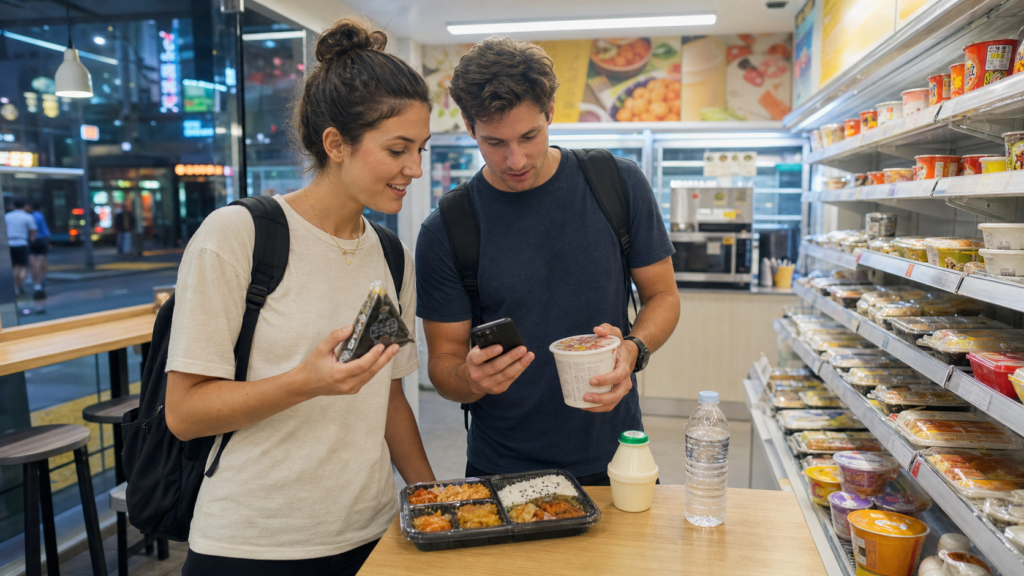
Korean convenience stores are not just places to buy a soda. For travelers, they can solve breakfast, late-night dinner, rain-day snacks, emergency water, SIM-card confusion, small medicine-adjacent needs, phone charging, transit-card top-ups in some locations, and the awkward moment when every restaurant nearby looks full or intimidating. That is why Korean convenience store food has become a real travel-search topic, not only a social-media curiosity.
The appeal is easy to understand. Shelves are full of triangle kimbap, dosirak lunchboxes, cup ramen, Korean fried-chicken snacks, rice balls, boiled eggs, salads, packaged fruit, coffee, banana-milk-style drinks, protein drinks, ice cups, ready-to-heat meals, and seasonal collaborations. The challenge is that labels, spice levels, heating rules, recycling stations, seating etiquette, and payment habits can feel different from a typical American gas-station or drugstore stop.
This guide is written for first-time visitors who want the useful answer fast: what to try, how to pay, how to heat food, how to use translation apps, what to avoid, and how to turn a convenience-store stop into a low-stress travel routine. It also connects to abcnote’s Korea eSIM or Pocket Wi-Fi guide, because translation, maps, payment troubleshooting, and food labels are much easier when your phone works before you enter the store.
Korean convenience store food in one minute
| What you want | Best first choice | What to check |
|---|---|---|
| Simple meal | Dosirak lunchbox, triangle kimbap, or rice bowl | Heating label, meat/seafood ingredients, expiration time, and whether chopsticks are included |
| Late-night comfort | Cup ramen plus water or a mild drink | Spice level, hot-water machine, seating rules, and whether the lid has a drain or sauce packet |
| Breakfast | Eggs, yogurt, fruit cup, sandwich, coffee, or triangle kimbap | Dairy, mayo, tuna, ham, and freshness dates |
| K-food curiosity | Tteokbokki cup, gimbap, banana-milk-style drink, honey-butter-style snack, or seasonal dessert | Spice, sugar level, allergens, and whether it needs microwaving |
| Phone-powered help | Translation camera, map app, payment backup, and eSIM/pocket Wi-Fi | Internet connection, offline language pack, and battery level |
| Budget control | One main, one drink, one snack | Shelf prices and promotions instead of grabbing five viral items at once |
Why Korean convenience stores feel different to Americans
In the United States, many convenience stores are built around fuel, packaged snacks, lottery tickets, and quick drinks. Korea’s major convenience-store chains are more deeply woven into urban daily life. In Seoul and other cities, you may find stores near subway exits, apartments, office blocks, schools, hotels, bus stops, and nightlife streets. Some have small eating counters. Some have microwaves, hot-water machines, ice cups, coffee machines, package services, or foreign-tourist services depending on branch and chain.
That daily-life role changes the food. A Korean convenience store has the packaged snacks you expect, but it also has food that people can turn into a quick meal. Office workers buy lunchboxes. Students buy ramen and drinks. Travelers buy water, snacks, umbrellas, and easy breakfasts. Foreign visitors often discover that the store is less like an American road-stop shelf and more like a tiny food lab where packaged items, heating machines, and quick seating can create a meal.
The technology layer also matters. A good visit depends on your phone: translation camera, map, travel internet, payment fallback, and sometimes a transit card. If your phone data fails, every label becomes harder. If your card is declined, the line gets stressful. If your translation app misreads an ingredient, you may buy something too spicy or unsafe for your diet. That is why convenience-store food is a practical travel-tech topic, not just a snack list.
What Americans should try first
Triangle kimbap
This is usually the easiest first item: rice wrapped with seaweed and a filling such as tuna mayo, bulgogi, kimchi, chicken, or spicy pork. Watch a quick wrapper-opening guide if needed because the plastic pull order can confuse first-timers.
Dosirak lunchbox
A dosirak is a boxed meal with rice and side dishes. It is more meal-like than snacks and usually easier to understand visually. Check whether it needs microwaving and whether the main protein is pork, beef, chicken, fish, or egg.
Cup ramen
Cup ramen is fun, cheap, and iconic, but the spicy ones can be much hotter than many Americans expect. Start mild, use the hot-water machine carefully, and keep the cup flat until the noodles soften.
Banana-milk-style drink
Sweet dairy drinks are a classic visitor item. If you avoid dairy or sugar, use the translation app before buying because packaging can make similar drinks look alike.
Prepared sandwiches
Sandwiches are familiar, but fillings may include egg salad, ham, crab-flavored seafood, sweet corn, cabbage, or mayo-heavy spreads. They are useful for breakfast when you do not want a full Korean meal.
Seasonal desserts
Convenience stores rotate cakes, puddings, ice creams, pastries, and collaboration desserts. Treat these as fun add-ons, not the core meal, because sweetness and texture may be different from U.S. expectations.
First-screen meal formulas that actually work
The easiest way to avoid buying random food is to use a simple formula. A first-time visitor does not need to understand the whole store. You need one main item, one hydration choice, and one curiosity item. That keeps cost low and makes mistakes less painful.
| Situation | Buy this | Skip this on the first visit |
|---|---|---|
| Hotel breakfast before a tour | Sandwich or triangle kimbap, yogurt or fruit, bottled water, coffee | Extra-spicy ramen if you have a long bus ride ahead |
| Late-night dinner after arrival | Dosirak, mild ramen, water, one snack | Raw-looking refrigerated seafood unless you can read the label |
| Snack walk in Seoul | One drink, one sweet item, one savory chip or rice snack | A full bag of viral items before tasting one |
| Budget lunch | Lunchbox plus water or tea | Multiple hot foods that need different machines and timing |
| Jet-lag meal | Plain rice item, egg, soup or mild noodles | Very spicy tteokbokki or unfamiliar dairy if your stomach is unsettled |
| Family stop | Mild items, packaged fruit, water, familiar-looking bakery or sandwich | Small choking-risk snacks for young children or allergen-unclear items |
How to use the hot-water and microwave area
Many Korean convenience stores provide hot water for ramen and microwaves for lunchboxes or ready meals. This is one of the best parts of the experience, but it is also where travelers create small messes. The rule is simple: read first, open carefully, heat only what is meant to be heated, and leave the station cleaner than you found it.
For cup ramen, open the lid only to the marked line if there is one, remove sauce or dried vegetable packets if needed, pour hot water to the fill line, close the lid, and wait the recommended minutes. Some cups have multiple packets. Some spicy sauces go in after draining or after the noodles soften. If you cannot read the label, use a translation camera or choose a simpler cup.
For dosirak or refrigerated meals, look for microwave symbols, heating times, and whether any sauce packet should be removed first. Do not microwave sealed sauce packets, metal-looking materials, foil, or anything that seems not intended for heating. If there is a line behind you, step aside after heating and organize your food at the counter instead of blocking the machine.
Payment, cards, transit cards, and cash
Many visitors can pay by international credit card, but card acceptance can vary by issuer, branch, terminal, and network. Keep a backup. A small amount of Korean won cash is useful. A transit/payment card can be useful for transportation and sometimes convenience-store purchases depending on card type and store support. T-money’s official English guide is a good starting point for understanding the transport-card side of the trip.
The practical payment flow is: put your items on the counter, keep your card ready, wait for the clerk to scan everything, tap or insert when prompted, then take the receipt only if you need it. If the terminal asks for installment options or the clerk says something you do not understand, keep the interaction simple: card, single payment, no bag if you do not need one.
Protect the same payment accounts you use while traveling. If you rely on mobile wallets, passcodes, card apps, or banking apps overseas, strong login hygiene matters. abcnote’s passkeys or password managers guide is not a travel-food article, but the habit is relevant: do not let a lost phone turn a snack stop into an account-security problem.
Use translation apps without trusting them blindly
Translation cameras are excellent for labels, but they are not perfect. They can misread stylized Korean text, ingredient lists, cooking steps, tiny allergy warnings, and marketing phrases. Use them for a first pass, then compare the image, icons, and common food words. If you have allergies, religious dietary restrictions, pregnancy concerns, medical restrictions, or strict vegetarian/vegan needs, do not rely on a single machine translation of a tiny label.
Google Translate help pages explain text, image, and conversation translation features. In Korea, many travelers also use Papago, and map apps such as Naver Map or KakaoMap are common for navigation. The tool choice matters less than the habit: prepare before checkout. Translate labels while standing at the shelf, not when the clerk is waiting.
| Korean word or clue | What it often means | Why travelers care |
|---|---|---|
| 매운 / 매콤 | Spicy or slightly spicy | Korean mild can still feel spicy to some visitors |
| 참치마요 | Tuna mayo | Common triangle kimbap filling; contains fish and mayo |
| 불고기 | Bulgogi-style beef | Popular savory filling, often sweeter than expected |
| 돼지 / 돈 | Pork | Important for dietary restrictions |
| 닭 | Chicken | Useful for choosing proteins |
| 새우 / 게맛 | Shrimp / crab-flavored seafood | Important for shellfish or seafood allergies |
| 유통기한 | Expiration or sell-by timing | Prepared foods may have short freshness windows |
Spice, allergens, and food-safety caution
Korean convenience-store food is generally designed for ordinary daily consumption, but travelers should still be careful. Prepared foods are packaged, refrigerated, heated, and sold under local rules, but your personal risk depends on allergies, digestion, dietary restrictions, and how confidently you can identify ingredients. The Ministry of Food and Drug Safety and Korea Consumer Agency are useful official starting points for broader food and consumer-safety context, but product-specific labels still matter most at the shelf.
The biggest first-visit mistake is assuming that a cute package means a mild flavor. Some ramen, tteokbokki cups, chicken snacks, and rice dishes can be genuinely spicy. If you are spice-sensitive, look for cheese, cream, mild, or non-red visual cues, but still translate the label. Buy water or milk-style drinks before trying very spicy items, not after you are already uncomfortable.
Allergen caution is even more important. Common convenience-store items may contain egg, milk, wheat, soy, fish, shellfish, sesame, peanuts, tree nuts, pork, beef, or chicken. If an allergy is serious, do not experiment casually. Choose clearly labeled foods, ask a Korean-speaking helper when possible, or buy from restaurants and stores where you can verify ingredients more confidently.
The best tech setup before entering the store
A convenience-store stop becomes easier when your phone is ready. Install and test your translation app, download Korean language support if your app allows offline use, keep your map app open, and make sure mobile data works. If you are still deciding between eSIM and pocket Wi-Fi, read the Korea eSIM or Pocket Wi-Fi guide before the trip, because label translation and map routing both depend on reliable connectivity.
Battery is the underrated issue. A phone at 8 percent battery makes every travel problem harder: payment, translation, maps, hotel address, taxi, subway routing, and emergency calls. If you are out all day, bring a small power bank and keep your cable accessible. Convenience stores may sell charging accessories, but buying the wrong cable at midnight is not a good plan.
Network quality inside dense city areas is usually good, but basement locations, crowded streets, and roaming settings can still create friction. If your translation app stalls, step near the window, use a saved offline pack, or choose foods with clear pictures and simple packaging. Boring preparation beats clever improvisation when you are hungry.
What to buy by traveler type
| Traveler type | Good first picks | Practical note |
|---|---|---|
| First-time American visitor | Triangle kimbap, mild ramen, dosirak, water, one sweet drink | Start with recognizable rice and noodle items before trying very spicy or fermented flavors |
| Family with children | Sandwiches, fruit cups, yogurt, mild rice balls, water | Check allergens and avoid tiny hard snacks for young kids |
| Vegetarian traveler | Salad, fruit, some rice items, drinks, bakery items after translation | Vegetarian-looking items may contain fish sauce, ham, gelatin, egg, or seafood flavoring |
| Budget backpacker | Lunchbox, ramen, water, coffee, simple snacks | Watch promotions, but do not buy more than you can carry or eat before expiration |
| Food-curious traveler | Tteokbokki cup, seasonal dessert, viral chips, Korean drink, convenience-store coffee | Buy one novelty item at a time so you know what you actually like |
| Spice-sensitive visitor | Mild gimbap, egg items, sandwich, yogurt, banana-milk-style drink | Do not trust red packaging or cute characters as a spice guide |
Store etiquette that keeps the stop easy
- Do not open food before paying unless you are in a setting where that is clearly allowed. Pay first, then eat.
- Use the eating area briefly if the branch has one. It is for quick meals, not long laptop sessions.
- Sort trash carefully when bins are separated. If unsure, look at what other customers do or ask politely.
- Keep microwave and hot-water areas clean. Wipe spills and move away after heating.
- Do not film staff or other customers closely. A convenience-store food video is not worth making someone uncomfortable.
- Keep the line moving. Translate labels at the shelf, not at the register.
Mistakes to avoid
Mistake 1: buying only viral foods
Social media can make Korean convenience stores look like a challenge course: buy every viral ramen, dessert, drink, and snack in one visit. That is fun for a video, but it is a poor travel meal. You may waste money, overload your stomach, or miss the simple everyday items that locals actually use. Start with a real meal, then add one novelty.
Mistake 2: assuming every store has the same services
Branches differ. One store may have a clean seating area, hot water, microwave, and broad food selection. Another may be tiny, crowded, or mostly drinks and snacks. Do not build your plan around one service unless you see it in that branch.
Mistake 3: trusting image-only decisions
Packaging photos help, but they do not reveal spice level, pork, seafood, dairy, nuts, or heating rules. Use visual clues plus translation. If the label is too confusing and the risk matters, choose something simpler.
Mistake 4: treating convenience-store food as restaurant advice
Convenience stores are useful, but they should not replace all Korean meals. Use them for practical gaps: early breakfast, late arrival, snack breaks, budget lunches, and travel emergencies. Leave space for markets, restaurants, bakeries, cafes, and regional food.
Mistake 5: forgetting the next travel step
Do not buy messy soup right before a crowded subway ride if you have nowhere to sit. Do not buy refrigerated food before a long outdoor walk in summer. Do not buy five drinks if you still need to carry luggage. The best convenience-store choice fits your next hour, not only your curiosity.
A practical first visit plan
Before entering, decide your goal: meal, snack, drink, emergency supply, or curiosity stop. Inside, make one slow lap. Find the refrigerated meal shelf, drink shelf, ramen shelf, and hot-water/microwave area. Pick one main food. Translate it. Check whether it needs heating. Add water. Add one fun item only if you still want it. Pay. Heat food carefully. Eat, clean up, and move on.
That plan sounds simple because it is. The point is not to turn a store visit into a research project. It is to avoid the common visitor mistakes: grabbing random spicy food, blocking the counter with translation, buying items that need a microwave when there is no microwave, and relying on mobile data that is not working.
Source notes and date checked
Sources and official reference pages were checked on July 22, 2026. Convenience-store menus, tourist services, promotions, payment support, and product availability change by branch and date, so this article avoids claiming that one chain or one product is always available. Use the official tourism, payment, translation, food-safety, and brand pages below as stable reference points, then verify the specific product in front of you.
- Google News search: Korean convenience store food and Korea travel
- Visit Korea official travel guide
- Visit Seoul official visitor guide
- Korea Tourism Organization: Korea Travel Hotline 1330
- T-money official English page
- Google Translate Help: translate text, images, and conversations
- Naver Map official English download page
- KakaoMap official service page
- Korea Consumer Agency English site
- Ministry of Food and Drug Safety English site
- CU official brand site
- GS25 official brand site
- 7-Eleven Korea official site
Bottom line: make the first meal easy
Korean convenience store food is one of the easiest ways for Americans to experience everyday Korea without needing a reservation, fluent Korean, or a big budget. The winning first visit is not the biggest haul. It is a low-stress meal: one understandable main, one drink, one curiosity item, clean heating, clean cleanup, and a phone setup that can translate labels before you buy.
Once that first visit feels easy, the store becomes more useful for the rest of the trip. It becomes the place you grab water before a palace walk, breakfast before a tour, ramen after a late flight, snacks for a train ride, and a small reset when travel plans get messy. Start simple, use your phone wisely, and treat the convenience store as a practical travel tool with surprisingly good food.